Doctoralia: pide citas médicas
- 4.8
- Rating
- 1.00M
- Installs
- Free
- Price

 Analysis by App-foxy
Finding a doctor can be surprisingly time-consuming when you are already worried about your health. You may need to compare specialties, search nearby practices, find a suitable time, and then remember the appointment details. Doctoralia: pide citas médicas brings that process into one medical app from Docplanner Health, with its main promise focused on arranging appointments online and communicating with a doctor through chat.
I see its strongest value in reducing the back-and-forth that usually happens over phone calls. Instead of treating a medical appointment as something you have to organize during office hours, the app gives you a more direct way to search and make a booking. It is free, available to everyone, and its medical category makes its purpose immediately clear: this is an access and organization tool, not a replacement for professional diagnosis.
The app has built a strong audience on Android, with more than a million installs and an average rating of 4.9 from roughly 71 thousand ratings. Those figures suggest that many people find the basic appointment workflow dependable. My own recommendation is more specific: it is especially useful when your priority is getting from “I need medical attention” to “I have a scheduled consultation” with as little friction as possible.
You May Also Like

 Pandora - Music & Podcasts
Pandora’s Music Is Easy to Start, but Harder to Recover
Pandora’s strength is its low-effort path from a seed to a station. Its weak spot is how much confidence it asks you to place in connection, setup, and quiet recovery.

 8 Ball Pool
 Is Built on Rivalries, Rematches, and Routine
A close look at the rivalries, rematches, shared routines, and unanswered safety questions that turn a quick pool match into a persistent mobile community.

 Samsung Music
’s Quiet Strength Is Playing What You Already Own
Its reach comes less from spectacle than from dependable access to a personal library. That simplicity is both the app’s strongest retention engine and its ceiling.

 AccuWeather: Weather Radar
AccuWeather Review: A Quick, Clear Forecast for Everyday Decisions
For everyday plans, the best forecast is the one you can understand quickly. AccuWeather makes rain timing, radar, and local conditions easy to act on, with a few trade-offs.

 Hill Climb Racing
Why Hill Climb Racing Still Turns Crashes Into One More Run
A tiny car, a bumpy hill and one more upgrade: Hill Climb Racing keeps resurfacing because its simple chaos makes every near-miss feel personal.

 AliExpress - Shopping App
AliExpress Makes Global Shopping Feel Personal, but Shoppers Bear the Risk
AliExpress turns a global marketplace into a pocket-sized discovery engine. Its reach is useful, its shopping loop compelling, and its trade-offs easy to miss.
More From Our News Desk
View All News


Making medical appointments the central task
I find it useful to treat the appointment search as a small decision process, not just a race to claim the earliest opening. Before I begin, I think through the kind of help I need and what would make a visit workable, so the options I consider are easier to compare. That approach also makes the next question—how the app behaves when I’m on the move or switching between connections—more relevant.
What the app does differently from a phone call
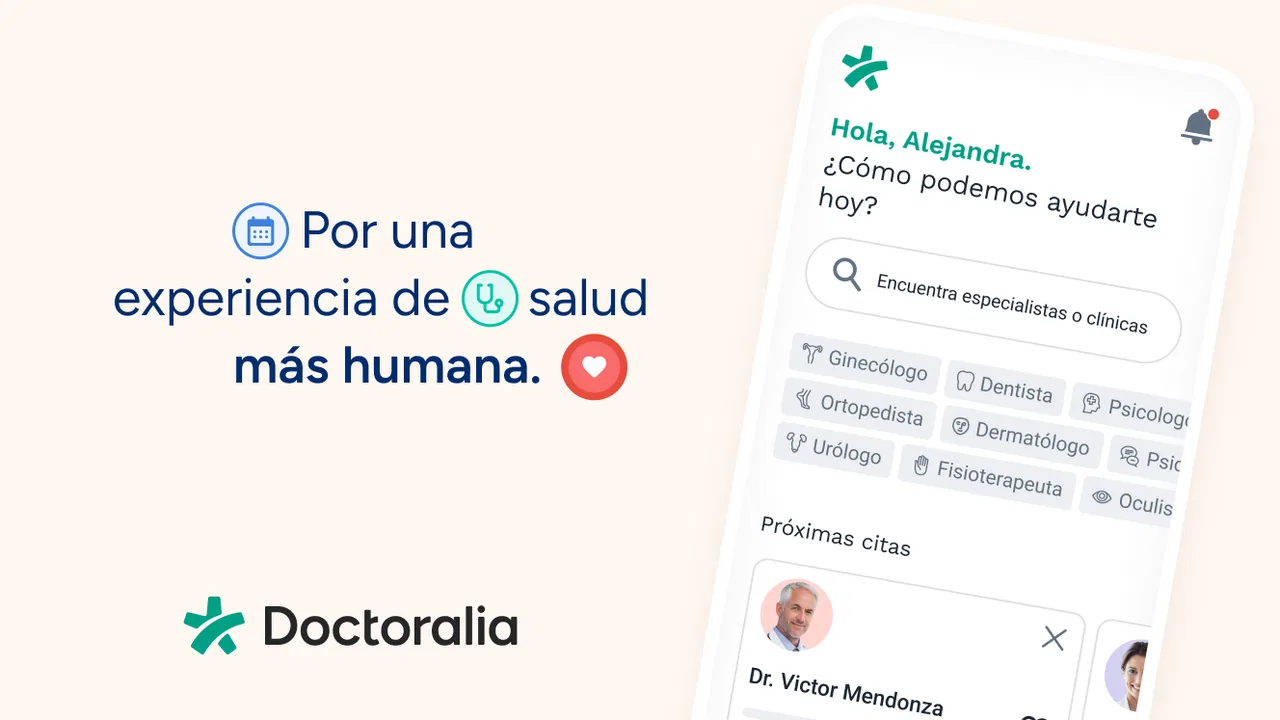
The important capability here is not simply displaying medical information. It is the ability to arrange a consultation online, while also providing a chat route for communicating with your doctor. That changes the starting point. Rather than calling several practices and waiting for someone to answer, you can begin by looking for the kind of care you need and then work through the available appointment choices in the app.
That distinction matters most for ordinary, non-emergency situations. If you need to discuss a persistent symptom, arrange a follow-up, or find a professional for a family member, the app can make the first administrative step feel more manageable. It does not make the medical decision for you, but it can remove some of the practical resistance that causes people to postpone care.
I also like the separation between arranging care and communicating about it. A booking tool is useful before the consultation; chat can be useful when a question comes up around the consultation. These are different needs, and keeping them in the same health-focused environment is more convenient than switching between a general messaging service, a phone contact list, and a separate calendar.
How I would use it in a real situation
Imagine that you have had recurring discomfort for several days and decide that waiting longer is not sensible. You open the app, search for the relevant type of doctor, and review the available options rather than relying on whichever practice appears first in a general web search. Once you find a suitable appointment, the online booking route helps you move forward without making a call while you are at work, commuting, or caring for a child.
For a family, the same workflow can be useful in a slightly different way. One person may be organizing several appointments and needs a simple place to handle the practical side of each request. The app’s focus on taking care of your own health and that of your family makes sense here: the value is not only in discovering a professional, but also in reducing the mental load around scheduling.
A useful habit is to decide what you need before searching. If you are looking for a routine consultation, be clear about the specialty and the reason for the visit. That makes the results easier to judge and reduces the temptation to choose an appointment only because it is the earliest one. Speed is helpful, but the right type of care matters more than getting the first available slot.
The difference between booking and medical advice
This is where expectations need to stay realistic. Doctoralia is best understood as a bridge to healthcare, not as a substitute for an examination. The chat capability may be convenient for communicating with a doctor, but a message cannot always provide the same information as an in-person consultation or a proper remote appointment. Symptoms that are severe, rapidly worsening, or potentially urgent should not be managed by waiting for an app response.
I would also avoid using the search process as a form of self-diagnosis. Choosing a specialty is sometimes straightforward, but symptoms can overlap across different areas of medicine. If you are unsure, a general medical consultation may be a more sensible starting point than trying to identify the exact specialist yourself. The app can help you organize the next step, but it cannot remove the need for judgment.
What the experience feels like in practice
The appeal of this kind of app comes from the sequence: search, compare, select, and arrange. That is much more focused than opening a general search engine and sorting through unrelated results, advertisements, outdated pages, or practice websites with unclear booking instructions. Doctoralia’s healthcare-specific purpose keeps the task centered on finding care.
There is still some work for the user. You need to read the available information carefully, check that the appointment suits your needs, and pay attention to the practical details shown during the booking process. An app can make access easier, but it cannot guarantee that every option will be equally suitable for every patient. I would treat the search results as a starting point for a decision, not as an automatic recommendation.
The chat function is most useful when it supports an existing care relationship. If you have already arranged a consultation or need to communicate with the doctor connected to your care, keeping that exchange close to the appointment workflow is sensible. It is less appropriate to think of chat as an always-available emergency channel or as a way to obtain a complete assessment from a short description.
The strongest everyday scenario
For me, the clearest use case is a busy person who knows they need a consultation but keeps delaying the phone call. Perhaps the person works shifts, cannot easily speak privately during the day, or is coordinating care for a child or parent. Online appointment booking turns the task into something that can be handled when the person has a quiet moment, instead of when a clinic happens to be reachable.
That convenience can have a real effect. The difference between “I should call tomorrow” and “I have arranged the next step” is important in healthcare. Doctoralia does not solve the underlying health concern, but it can shorten the distance between recognizing a need and taking practical action. That is a more meaningful benefit than simply having another app on your phone.
It is also helpful for follow-up planning. After a consultation, people often have several small administrative tasks competing for attention. Using the same app environment to manage communication can make the process feel less scattered. I would still keep my own reminder system as a backup, especially for appointments that are important or far in the future, because relying on memory is an avoidable risk.
Where the usual alternatives may be better
The traditional phone call remains the better option when your situation is complicated and you need to explain it before anyone suggests an appointment. A receptionist may be able to direct you to the appropriate service or clarify practical questions that are difficult to resolve through a search screen. If the app does not present an option that fits your circumstances, calling the practice directly is not a failure of the app; it is simply the more suitable channel.
A clinic’s own booking system may also be preferable if you already know exactly where you want to go. In that case, Doctoralia can add an extra step rather than remove one. Its advantage is strongest when you are comparing possibilities or trying to begin the search without an established provider.
General video consultation services can be a better fit for someone who wants a consultation designed specifically around remote care. Doctoralia’s value, as I experienced it, is broader: it helps connect the search and appointment process, with chat included as part of that healthcare workflow. The right choice depends on whether your main problem is finding care, reaching a known service, or getting a consultation in a particular format.
Small points that deserve attention
One trade-off is that convenience can encourage rushed choices. The earliest appointment is not necessarily the best appointment, and a familiar-looking profile is not automatically the right match for your concern. I recommend slowing down long enough to confirm the specialty and the purpose of the visit before booking. That extra minute can prevent a frustrating appointment that does not address the problem.
Another trade-off is communication. Chat feels immediate, but the doctor’s response may depend on their working schedule and the nature of the question. It is useful for appropriate medical communication, yet it should not create the expectation of instant answers. If you need urgent help, use the appropriate emergency or urgent-care route rather than waiting inside a general appointment app.
There is also a personal organization issue. Anyone managing care for several relatives should keep names, dates, and reasons for visits clearly separated. A shared household can quickly become confusing if every appointment is treated as belonging to the same person. I would prepare the patient’s details and the main reason for the visit before starting the booking process, particularly when arranging care for someone else.
The app is free, which removes an obvious barrier to trying it. It is rated for everyone, so it is not presented as an age-restricted product, but that does not mean every medical decision is suitable for a child to make independently. Parents and caregivers should remain involved when the patient is a minor or needs help understanding the appointment process.
Who will get the most from it
Doctoralia is a strong fit for people who value online organization and want a direct way to search for a medical appointment. It is particularly useful for those who dislike phone queues, have irregular schedules, or need to coordinate care for family members. The app also makes sense for someone who does not yet have a preferred doctor and wants to explore available options in a healthcare-specific setting.
It is less compelling for users who already have a reliable clinic, always prefer speaking to reception, or need urgent clinical guidance rather than appointment administration. Someone looking for a complete symptom checker, emergency support, or a guaranteed instant medical response should choose a service designed for that purpose instead. The app’s strength is focused and practical; expecting it to cover every part of healthcare would lead to disappointment.
The current version is 5.280.0 and supports Android 7.0 or later, so compatibility should be straightforward for many Android users. I would still check the device’s available space and operating-system status before installing, especially on an older phone. The app’s release history began on September 13, 2021, and its continued presence alongside a large user base gives it the feel of an established tool rather than a short-lived experiment.
My recommendation after using it
I recommend Doctoralia when the obstacle is arranging care. Its best feature is not flashy: it makes the first administrative step more accessible by bringing medical search, online booking, and doctor communication into one focused place. For a routine consultation or family scheduling task, that can save time and make it easier to follow through.
I would use it deliberately rather than passively. Search with a clear purpose, check that the selected professional matches the kind of help you need, and treat chat as a communication option rather than an emergency service. Keep your own reminders, and switch to a direct clinic call when your situation requires clarification that an online booking flow cannot provide.
Overall, the free app earns its place on my phone because it addresses a very ordinary but important problem: turning the intention to seek medical care into an actual appointment. It is not a replacement for doctors, clinics, or urgent services, and it should not be judged by those standards. For people who want a simpler route to finding and organizing consultations, Doctoralia: pide citas médicas is a practical choice from Docplanner Health, with a clear purpose and a workflow that can genuinely reduce everyday healthcare friction.
FAQs for Doctoralia: pide citas médicas
01What features does Doctoralia offer to users?
Doctoralia provides a convenient platform for booking medical appointments online. Users can search for healthcare professionals based on specialty, location, and patient reviews. Additionally, the app offers features such as teleconsultations, appointment reminders, and access to patient feedback. These tools aim to enhance the overall healthcare experience by simplifying the appointment process.
02Is Doctoralia available in multiple languages?
Yes, Doctoralia supports multiple languages to cater to a diverse user base. This makes it accessible to users in various countries, ensuring that language barriers do not hinder the process of booking medical appointments or accessing healthcare services. Always check the app settings to select your preferred language.
03How secure is my personal information on Doctoralia?
Doctoralia places a strong emphasis on user privacy and data security. The app uses encryption and other security measures to protect personal information and ensure that all transactions and communications are secure. Users can feel confident that their data is handled with care and in compliance with privacy regulations.
04Can I use Doctoralia to book appointments with any type of healthcare professional?
Doctoralia allows users to book appointments with a wide range of healthcare professionals, including general practitioners, specialists, dentists, and more. The app's search functionality makes it easy to find professionals based on specialty and location, ensuring users can access the specific care they need.
05Are there any costs associated with using Doctoralia for booking appointments?
Downloading and using Doctoralia to search for doctors and book appointments is generally free. However, fees may apply for specific services like teleconsultations, depending on the healthcare provider. It’s advisable to check with the provider and the app’s terms and conditions for any applicable charges.
Pros
- User-friendly interface for easy navigation.
- Wide range of healthcare professionals available.
- Convenient appointment booking system.
- Access to verified patient reviews.
- Multi-language support for global users.
Cons
- Limited availability in some regions.
- Occasional app performance issues.
- In-app ads can be intrusive.
- Requires stable internet connection.
- Limited offline functionality.

Doctoralia: pide citas médicas
Gallery